
RECAP: Land Use & Transportation Policy from the 2026 General Assembly Session

Of the 219 bills that Virginia Conservation Network took a position on this session, 37 bills addressed land use & transportation policy for the Commonwealth. Our Network’s advocacy this year focused on:
- Increasing accessibility of electric vehicles and electric vehicle charging
- Ensuring further transparency from the data center industry
- Creating safe, affordable housing for healthier communities
- Making streets safer for people bicycling
See the wins and missed opportunities for land use & transportation policy below. You can see the outcomes of all of VCN’s policy positions on our Bill Tracker.
POLICY WINS & LOSSES FOR LAND USE & TRANSPORTATION
INCREASED ELECTRIC VEHICLE & CHARGING ACCESSIBILITY

Electric Vehicle Charging Station at Byrd Visitor Center, Shenandoah National Park, Virginia. Photo by Daniel White, The Nature Conservancy.
More Virginians are looking to transition to electric vehicles (EVs) to save money and reduce their tailpipe emissions. Yet, existing barriers are limiting the transition to EVs, making the benefits of EVs not equally accessible to all drivers in Virginia.
Legislators passed several bills and budget amendments to help with the transition to EVs:
- Allows local governments to set standards for EV-readiness in new buildings to accelerate charging deployment (HB833 & Budget Item 109 #5h)
- Strengthens the building code process by requiring full consideration and votes on EV-readiness proposals (HB951)
- Expands and funds EV charging across Virginia to tackle the primary barrier to EV adoption—range anxiety (HB1225 / SB407)
- Directs the Secretary of Transportation to identify federal funds to support the deployment of rural electric vehicle charging infrastructure in Virginia (Budget Item 420 #1h)
While there were several wins, critical bills intended to install EV infrastructure in rural and low-income localities, establish goals and interim targets for adding EVs to the centralized state fleet and EV chargers at government facilities, and activate Virginia’s existing EV grant fund by removing funding barriers to adding EVs to public school fleets and enabling state investment were defeated.
Learn more about investing in the transition to electric vehicles in our Bill of the Day post.
ENSURING TRANSPARENCY IN DATA CENTER SITING
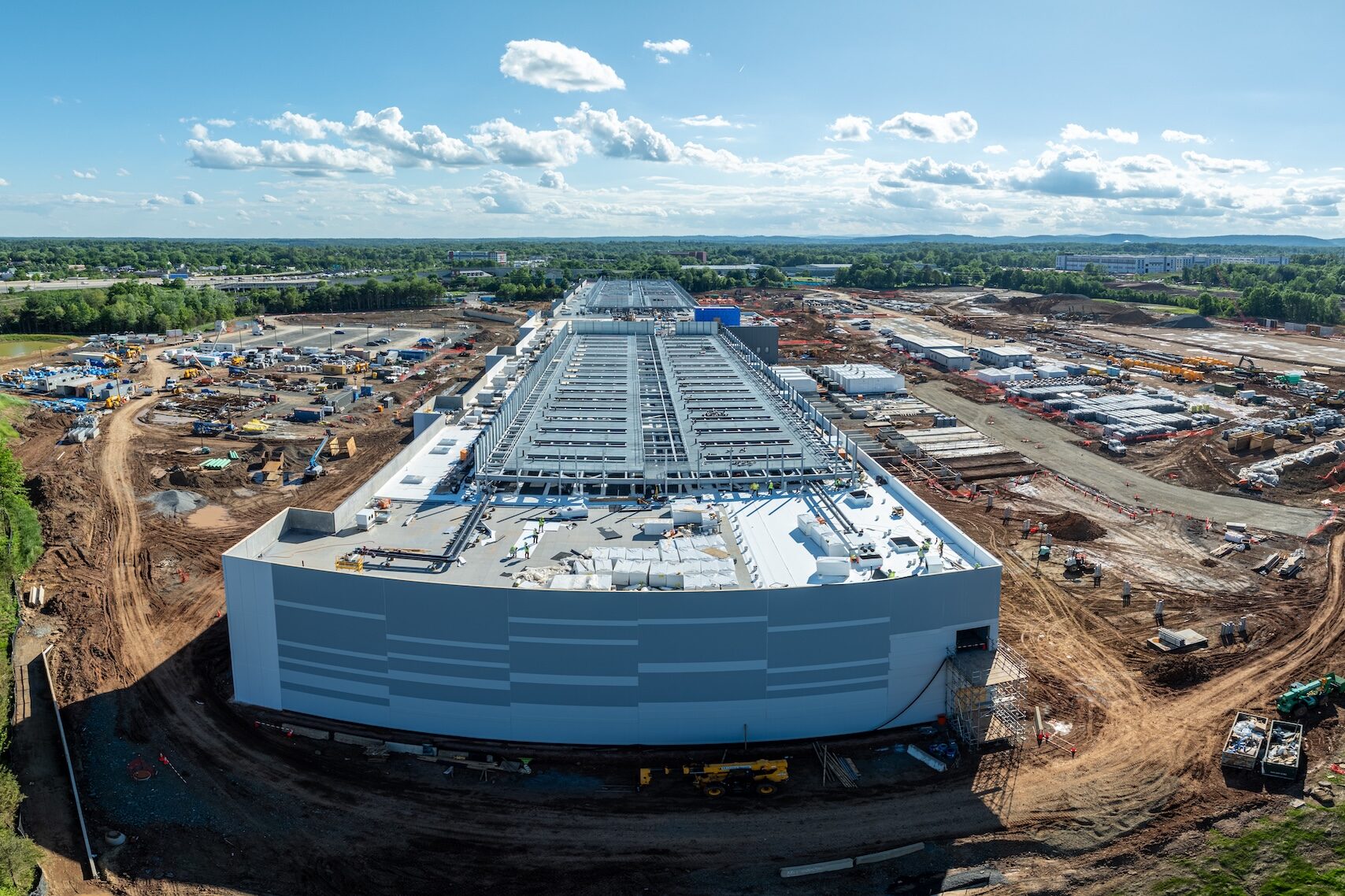
Gainesville Data Center in Prince William County, Virginia. Photo by Hugh Kenny, Piedmont Environmental Council.
Data centers’ industrial sprawl is damaging natural resources and historic landscapes, impacting nearby neighborhoods and schools, and inflating land prices. Additional transparency from the data center industry, alongside state and local review and oversight, is needed to help Virginia plan for and mitigate land use, water, air quality, and energy impacts from data centers.
Legislators passed a bill to ensure future data center rezonings are only approved on land planned for industrial use, and allow localities to require site assessments on water, land, noise impact, and other impacts on natural resources (SB94).
Yet, legislators missed other opportunities to expand data center transparency:
- Temporarily pausing data center development until all current pending requests for connection to the grid are fulfilled
- Directing the Department of Environmental Quality to review, approve, and enforce site assessments for large data centers
See all the passed and defeated bills regarding data center reform on our Bill of the Day post.
CREATING AFFORDABLE HOUSING FOR HEALTHIER COMMUNITIES (& ENVIRONMENT)

Lack of affordable housing leads to car-dependent suburban sprawl. Photo in Prince William County, Virginia, by William Parson.
We are in a statewide housing shortage, causing increased home values and rent costs. Zoning policies across Virginia limit building small, affordable homes on small lots in our cities, towns, and existing suburbs. Many residents are forced to live farther out and into car-dependent suburbs, increasing carbon pollution from longer commutes and removing farmland and forests for poorly planned development.
Legislators passed several bills that would update zoning policies to create more affordable housing and reduce poorly planned development:
- Enables localities to adopt a right of first refusal ordinance to purchase and preserve affordable housing (HB4)
- Incentivizes development in underutilized or vacant lots by allowing Charlottesville, Falls Church, Fredericksburg, and Newport News to join four existing jurisdictions in setting different tax rates for land and for improvements made on that land (including housing) (HB282
- Enables local governments to expedite approval process for affordable housing in suitable locations (HB594)
- Allows localities to adopt affordable housing dwelling unit programs that provide optional increases in density to support inclusion of moderately-priced housing (HB867 / SB74)
- Legalizes accessory dwelling units (ADUs), also known as granny flats or backyard cottages, in single-family residential districts statewide (SB531)
Learn more about affordable housing in our Bill of the Day post.
MAKING STREETS SAFER FOR PEOPLE WHO BICYCLE
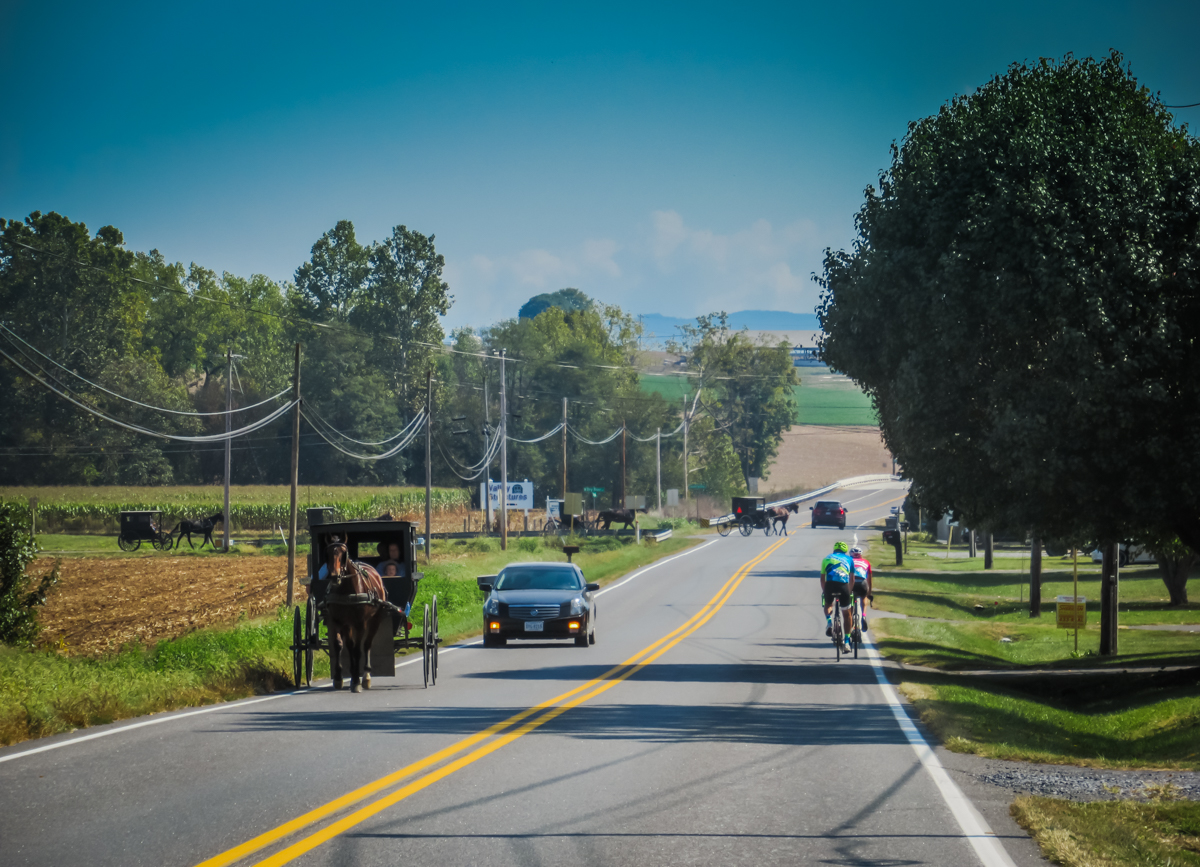
Bicycles, Buggies, & Cars in Rockingham County, Virginia. Photo by Sandra Parks.
Encouraging people to bicycle is essential to reduce carbon pollution, improve public health, and achieve Virginia’s climate goals. However, many Virginians don’t bicycle as much as they would like to due to the lack of safe and accessible infrastructure.
Legislators passed a bill to improve safety for people bicycling by allowing the use of Bicycle Signal Faces (HB812). Yet, legislators missed the opportunity to pass the Omnibus Bicyclist Safety Bill, which would have aligned existing law with proven national best practices to further improve safety for people bicycling.
MORE POLICY UPDATES FROM THE GENERAL ASSEMBLY

Bills that passed the General Assembly now head to the Governor’s desk for her to sign, amend, or veto by April 14th. Legislators will make a final vote on amended bills during Veto Session on April 22nd to determine which bills will officially become law starting on July 1st, 2026.
Be the first to know about new environmental legislation: register for our virtual General Assembly Recap on Friday, April 24th, from 10:30 AM – 12:00 PM. You’ll hear the inside scoop from environmental policy experts about the conservation community’s biggest victories, the missed opportunities, and any surprise outcomes from the 2026 General Assembly session.
See the outcomes of other environmental policies from the 2026 General Assembly session below:


