
Bill of the Day: Data Center Reform
Last updated May 5th, 2026.
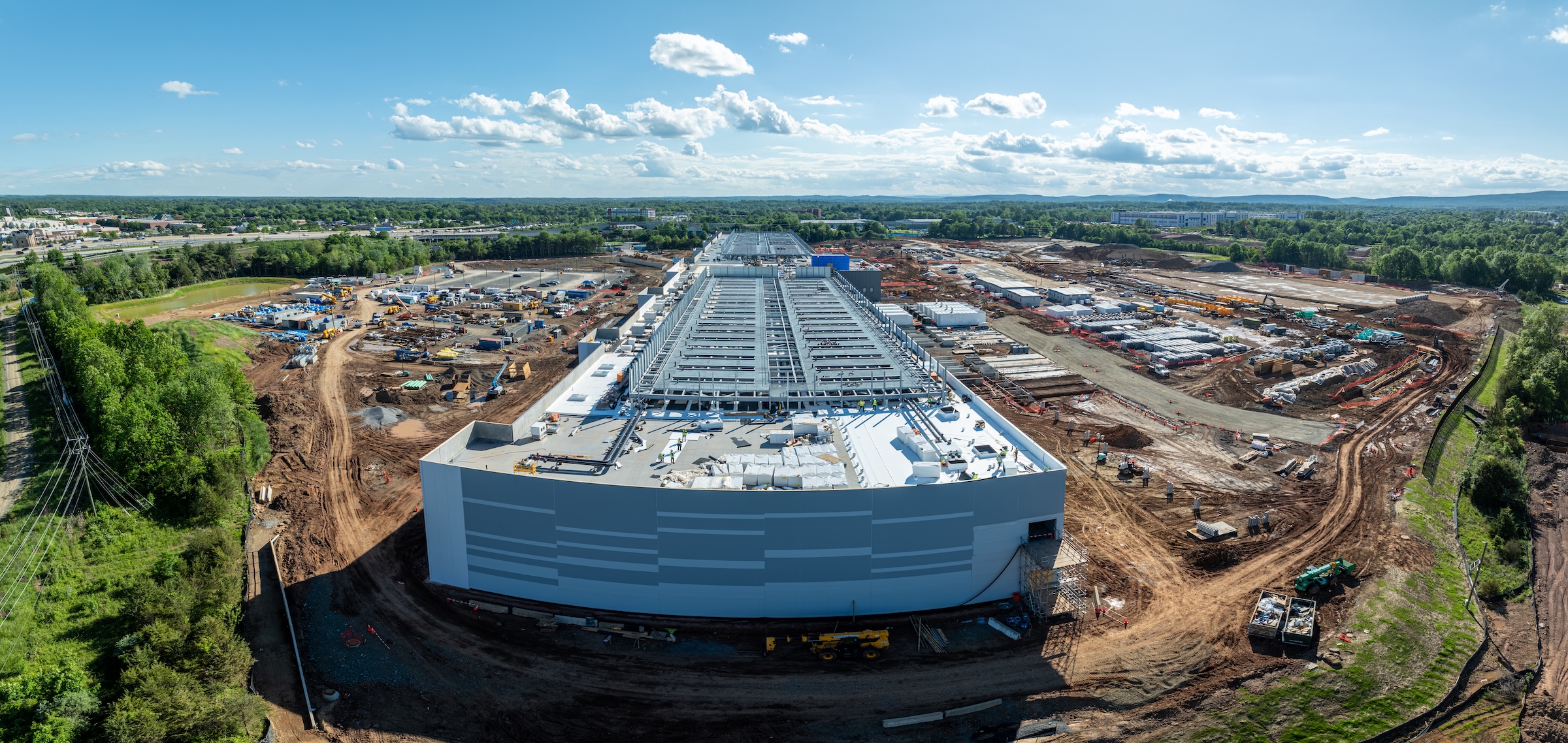
Gainesville Data Center in Prince William county, Virginia. Photo by Hugh Kenny, Piedmont Environmental Center.
Holding Data Centers Accountable for Their Fair Share
Virginia is home to the largest concentration of data centers in the world, widely cited as hosting 70% of global internet traffic. This massive industry is growing rapidly, requiring huge amounts of energy, land, and water to operate, resulting in widespread community impacts. Yet, the Commonwealth does not currently have comprehensive regulatory oversight of data center development, and localities continue to approve more facilities without considering the cumulative impacts.
Data centers receive the biggest tax break in Virginia compared to any other industry. These tax breaks reached a staggering $1.6 billion in waived taxes in 2025 for some of the most profitable companies in the world. At the same time, data centers are skyrocketing Virginia’s energy demand, straining the grid, causing Virginians’ electric bills to rise, and spewing toxic air pollution into nearby communities. These financial and environmental costs are being passed on to Virginians while big corporations profit. Data centers should be responsible for their fair share of the resources they consume to run their facilities.
Our legislative solutions aim to hold data centers for their fair share of environmental burden while reducing harmful impacts, preventing pollution, and protecting the public:
Responsible Oversight: State Regulatory Authority
Uncoordinated data center expansion within localities risks overloading energy infrastructure, driving up costs for families, and depleting natural resources. Setting up state programs and requiring state-level approval before utilities commit to providing electric service for large users of electricity will allow for a more thorough evaluation that safeguards the public interest statewide.
(Delegate Feggans) Requires the State Corporation Commission to establish demand flexibility programs for data centers to protect ratepayers and reduce strain on the grid. Companion to SB371.
(Senator McPike) Requires the State Corporation Commission to establish demand flexibility programs for data centers to protect ratepayers and reduce strain on the grid. Companion to HB284.
(Delegate Thomas) Allows the SCC to assess a proposed data center’s grid reliability, cost impacts, economic contributions, and compliance with Virginia’s energy and environmental policies. Companion to SB619.
(Senator Srinivasan) Allows the State Corporation Commission to assess a proposed data center’s grid reliability, cost impacts, economic contributions, and compliance with Virginia’s energy and environmental policies. Companion to HB155.
Ensuring clean energy standards and efficiency
Research shows that the most affordable, reliable way to meet increasing energy demand is through robust energy efficiency measures, clean energy, and battery storage. Data centers should be required to meet energy efficiency and clean energy standards instead of using polluting energy infrastructure.
(Delegate Sullivan) Directs the Department of Energy to develop a plan for using data center waste heat to improve energy efficiency and lower emissions.
(Delegate McAuliffe) Limits data centers’ use of carbon dioxide-emitting backup generators.
(Delegate Sullivan) Adds requirements for energy efficiency, renewable energy procurement standards, and clean energy backup power, such as battery storage, for data centers to qualify for the state tax exemption. Companion to SB465.
(Senator Deeds) Adds requirements for energy efficiency, renewable energy procurement standards, and clean energy backup power, such as battery storage, for data centers to qualify for the state tax exemption. Companion to HB897.
Protecting Families and Businesses from Costs
The rapid growth of data centers’ electricity demand will shift costs onto families and businesses under current rules. These measures ensure costs are borne by those who directly benefit from the infrastructure:
(Delegate Lopes-Maldonado) Directs the State Corporation Commission to consider transmission costs from data centers to protect families from increased bills from data center load growth. Companion to SB339.
(Senator Perry) Directs the State Corporation Commission to consider transmission costs from data centers to protect families from increased bills from data center load growth.
Enhancing Transparency for Water and Electricity Use
Virginia lacks centralized tracking of energy and water use by high-energy facilities. The following bills will enhance transparency, oversight, and planning.
(Delegate Thomas) Data centers must provide localities with a noise impact assessment on nearby residential areas and schools. Localities may require a site assessment on water, agriculture, parks, historic sites, and forests impacts.
(Delegate Shin) Requires an investigation of utilities’ energy demand projections so that they are not overinflated and Virginians don’t pay for infrastructure we don’t need.
(Senator Roem) Data centers must provide localities with a noise impact assessment on nearby residential areas and schools. Localities may require a site assessment on water, agriculture, parks, historic sites, and forests impacts. The bill also requires the disclosure of needed new electric utility infrastructure, like transmission lines and substations, that would be constructed to support the project within that locality.
NEUTRAL SB553
(Senator Srinivasan) Addresses data center’s water use.
(Delegate Simonds) Requires Local Water Authorities to disclose the water use of data center customers to the State Water Control Board so that the Virginia Department of Environmental Quality (DEQ) can calculate the total water usage of the industry. Companion to SB553.
Ensures transparency for how much data centers receive in tax exemptions and if they’re meeting their intended economic development goals. Incorporated into HB897.
Data centers must provide localities with a noise impact assessment on nearby residential areas and schools. Localities may require a site assessment on water, agriculture, parks, historic sites, and forests impacts. Incorporated into SB94.
Purposefully Siting Data Centers to Protect Communities
Data center’s industrial sprawl is damaging natural resources and historic landscapes; impairing public parkland; impacting adjacent neighborhoods, schools, and medical facilities; and inflating land prices.
(Delegate Shin) Temporarily pauses data center development until all current pending requests for connection to the grid are fulfilled.
(Senator Sturtevant) Directs the Department of Environmental Quality to review, approve, and enforce site assessments for large data centers.
Take Action
HB153, HB284, HB323, HB507, HB892, SB94, and SB371 were signed by Governor Spanberger.
Keep updated with our Data Center page to see the latest news in our Commonwealth.