
Bill of the Day: Investing in the Transition to Electric Vehicles
Last updated May 5th, 2026.
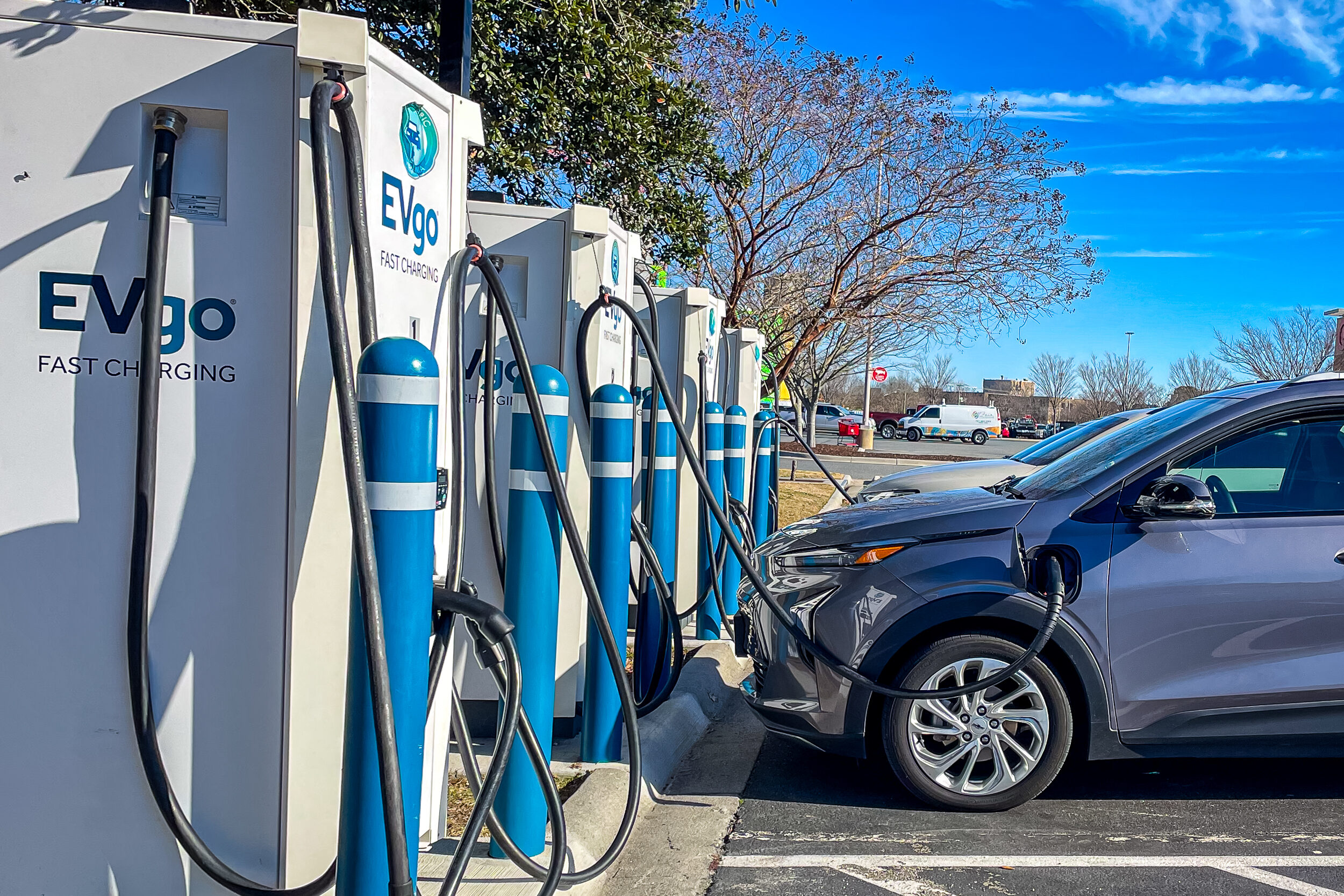
Electric Vehicle Chargers in Virginia Beach. Photo by Sue Mangan.
Why Invest in the Transition to Electric Vehicles?
More Virginians are transitioning to electric vehicles (EVs). EV drivers save between $6,000 to $12,000 over the car’s lifetime compared to a gas-powered car, spending less on fuel and maintenance and more towards food, housing, and their well-being. The transition to EVs also leads to cleaner air and healthier communities by reducing the largest source of carbon pollution in the state: transportation. With more than 100k EVs on the road in Virginia today, Dominion Energy projects more than 750k EVs in its territory by 2030.
However, existing barriers are limiting the transition to EVs. People living in rural areas, multi-family housing, and rental properties often lack access to EV chargers, making it difficult to own and operate one. New buildings are often built without EV-ready infrastructure, and retrofitting them later can increase costs by four to ten times more than including it during construction. Existing laws limit local governments from setting minimum standards for EV infrastructure during construction, limiting their ability to support EV use locally.
You can take a deeper dive into the transition to electric vehicles in Our Common Agenda. To learn more, read our “Accelerating our Transition to Electric Cars” policy paper.
EV Readiness Bills to Support in the General Assembly
Legislators have introduced bills to prioritize EV readiness across the Commonwealth:
(Delegate Adele McClure) Allows local governments to set standards for EV-readiness in new multifamily, commercial, and industrial buildings.
(Delegate Alfonso Lopez) Requires full consideration and votes from the Board of Housing and Community Development on EV-readiness proposal, while preserving flexibility for homebuilders and protecting housing affordability.
(Delegate Irene Shin) Expands EV charging across Virginia by supporting private charging businesses, improving utility programs, and lowering the cost to install new chargers, especially in rural and underserved communities. Companion to SB407.
(Senator Jennifer Boysko) Expands EV charging across Virginia by supporting private charging businesses, improving utility programs, and lowering the cost to install new chargers, especially in rural and underserved communities. Companion to HB1225.
(Del Richard “Rip” Sullivan) Creates the Rural Charging Infrastructure Program and Fund, expanding EV charging in rural and low-income communities.
(Del Richard “Rip” Sullivan) Sets clear goals and interim targets for adding EVs to the centralized state fleet and installing EV chargers at government facilities.
(Delegate Gretchen Bulova) Activate the existing VA Electric Vehicle Grant Fund and Program by removing funding barriers and enabling state investment in electric school buses and clean vehicle replacements that reduce pollution, protect children’s health, and save public dollars.
Take Action
HB833, HB951, HB1225, and SB407 were signed by Governor Spanberger. HB324 and HB1340 were both continued to 2027 in the House Appropriations Committee. HB890 was continued to 2027 in the House Rules Committee.
Keep updated with our Land Use & Transportation issue page to see the latest news in our Commonwealth.