
Extending Producer Responsibility Towards Mattress Stewardship
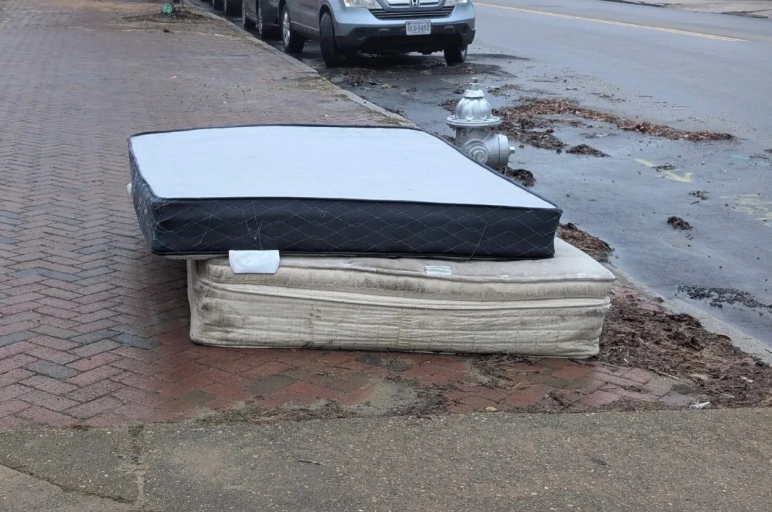
Mattresses on Curbside. Photo by Elly Boehmer Wilson, Environment Virginia.
What Is Extended Producer Responsibility?
An extended producer responsibility (ERP) program is a policy that holds manufacturers and importers responsible for a product’s entire life cycle, including its packaging, composition of recycled content, disposal, and waste management after it is no longer useful to consumers. Often, costs associated with waste disposal are not thought about by the consumer nor the producer.
Removal of a mattress from one’s own home costs money, and landfills often charge extra for mattress disposal. By implementing EPR policies, producers are required to think about the final destination of their post-consumer products and take responsibility for these products once discarded by consumers.
Virginia already has existing ERP programs for different types of hard-to-manage waste, such as the Computer Recovery and Recycling Act from 2008. Yet, many localities are continuing to cut or reduce their curbside recycling programs across the state, making it difficult for consumers to recycle.
Utilized effectively, an EPR program for mattresses would lower the amount of space taken up in landfills and reduce the amount of mattresses strewn about the streets in Virginia. It would help establish specific sites for mattress disposal where they would then be transported and finally recycled.
Why Does Virginia Need a Mattress Stewardship Program?
According to the Mattress Recycling Council, more than 50,000 mattresses are discarded daily. Additionally, the removal of a mattress from one’s home is an undertaking. Mattresses are bulky items, which are cumbersome to move. They also take up a large amount of space in landfills and other garbage disposal facilities.
Establishing a mattress stewardship program encourages extended producer responsibility and helps Virginia by:
- Recovering recyclable materials: More than 75% of the majority of a mattress’ materials’ are recyclable but only about 10% of materials are actively recycled or recovered from post-consumer mattresses.
- Recycling and reuse programs generate jobs: Roughly 47% growth in job opportunities by 2030 as opposed to only 11% growth in landfill waste management. The recycling of materials is labor intensive, and skills required for processing are easily learned through training.
- Reduces illegal dumping: Implementing this program would combat high fees and limited disposal options by establishing disposal sites that would ease the pressure on the consumer and reduce the resource cost by the Commonwealth in clean-ups.
That said, mattresses are often made with a variety of synthetic materials which can pose harm to the environment if they are not properly disposed of. Mattresses are not something people tend to think of as a pollutant, but these large products are hard to break down. The majority of materials used in mattress production are common, such as wood, metal, and cotton. But there are other materials, such as synthetic foams, formaldehyde-based adhesives, and pesticides, that are applied to mattresses for manufacturing and safety purposes and release. This can be particularly hazardous during large rain and storm events, leading to stormwater runoff that interacts with discarded mattresses, absorbs these harmful chemicals, and enters nearby land and waterways.
Implementing an extended producer responsibility program would require producers to take additional responsibility for the end-of-life of mattresses in Virginia that could be retrieved before reaching a landfill, assessed, and recycled. According to the Product Stewardship Institute, the average cost increase for mattresses would be about $21 in the form of an additional fee, and considering the infrequency of mattress purchases, amounts to about $21 every 5 to 10 years. This nominal cost would ensure that mattresses are not left strewn about on city streets or inopportune locations, and instead, are properly disposed and recycled.
The effect this program would have on mattress pollution would be rapid and apparent. An established stewardship program with strategically located drop off centers would encourage mattresses that have been littered across the state to be recycled and broken down into other products rather than contributing to the degradation of the environment. Given that a majority of the materials utilized in the manufacturing of mattresses are recyclable, it is easy to see how establishing a policy of extended producer responsibility for mattresses would be greatly beneficial. One of the largest costs of manufacturing mattresses comes from the raw materials, at about $150 – $200 for an average mattress. Extended producer responsibility policies would require producers and manufacturers to think more holistically about their products’ end-of-life disposal.
Legislative Efforts
During the 2026 General Assembly session, legislation was proposed that would allow for industry associations to establish mattress recycling organizations with the approval of the Virginia Department of Environmental Quality (DEQ). This legislation would have required that mattress producers register with a certified mattress recycling organization for pick-up and disposal of post-consumer mattresses. This proposed program passed both the House of Delegates and the Senate and arrived at the Governor’s office, where it was vetoed.
With increased education and stakeholder engagement on mattress disposal and the value of EPR policies on our environment and communities—particularly at universities and hotels with higher rates of mattress turnover—Virginia can improve the success of a future mattress stewardship program.
Take Action
Take a look at our Plastic Waste issue page to keep updated for the latest extended producer responsibility news in our Commonwealth.