
Bill of the Day: Expanding Solar Energy
Updated on February 20th, 2023.
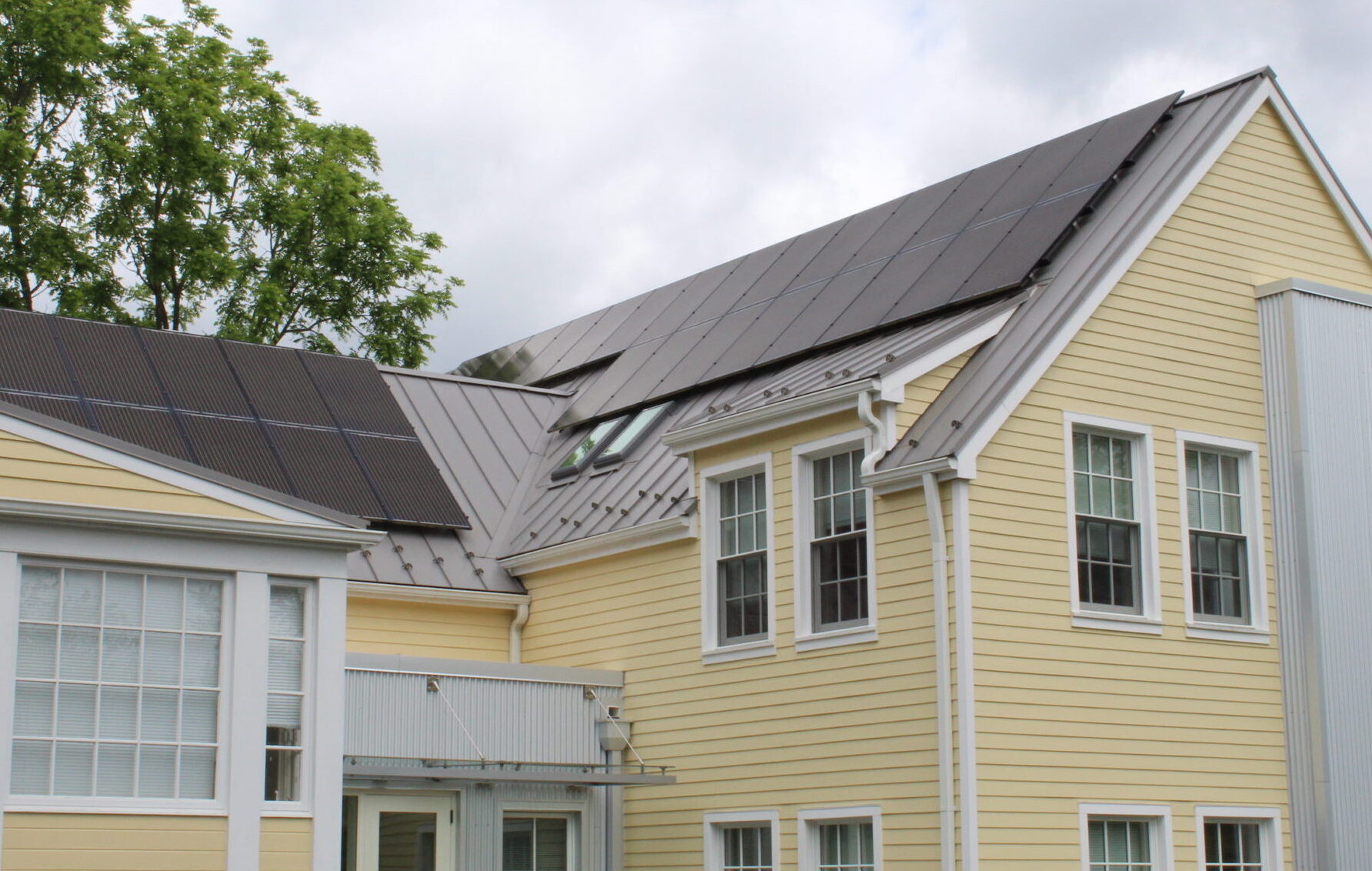
Through distributed/shared solar, low-to-moderate income Virginians will be able to greater participate in solar programs and offset all or a majority of the costs of a solar energy system. Image Credit: Piedmont Environmental Council (PEC)
Why should Virginia go solar?
Going solar reduces energy burdens and costs for Virginians while making our buildings more energy efficient and clean. Installing more solar is critical for Virginia to hit our 100% clean energy targets outlined in the Virginia Clean Economy Act (VCEA).
Unfortunately, there are many policy barriers in place that hinder rooftop and distributed/shared solar options for Virginians (to learn why, read our “BRINGING MORE RESILIENT ENERGY TO VIRGINIA COMMUNITIES” policy paper).
On the bright side, a series of bills to promote distributed solar have passed through the Senate with bipartisan support and are now headed to the House! These bills will:
- Develop recommendations for schools to be solar-ready when constructing or renovating buildings.
- Expand shared solar programs throughout the state.
- Help Virginia take advantage of federal Inflation Reduction Act (IRA) funds to advance solar projects.
Solar Bills To Support in the General Assembly
A series of solar bills have passed the Senate with bipartisan support, but must still be passed by the House of Delegates. The House will soon hear and vote on these solar bills:
(Senator Hashmi) Expands solar and energy efficiency projects for low-income and moderate-income Virginians by empowering the Clean Energy Advisory Board to apply to the Environmental Protection Agency (EPA) for grant funds made available via the Inflation Reduction Act (IRA)’s Greenhouse Gas Reduction Fund.
Expands the shared solar program to customers in Appalachian Power Company and Old Dominion Power Company’s territories while setting limits on monthly utility bills. This makes our energy transition more equitable by reducing energy costs for participating customers, especially low-income customers who are exempt from the minimum bill.
Allows more Virginians to participate in our clean energy transition by expanding Dominion’s shared solar program and requiring that a customer’s net bill for participating in the shared solar program will not exceed the minimum bill established by the State Corporation Commission (SCC).
Develops recommendations on strategies to assist interested school divisions with incorporating renewable energy generation facilities in the construction or renovation of school buildings. Companion to HB1852.
Directs the Commission on School Construction and Modernization, in consultation with the Department of Energy, to develop and make recommendations on strategies to assist interested school divisions with incorporating renewable energy generation facilities in the construction or renovation of school buildings Companion to SB848.
Take Action
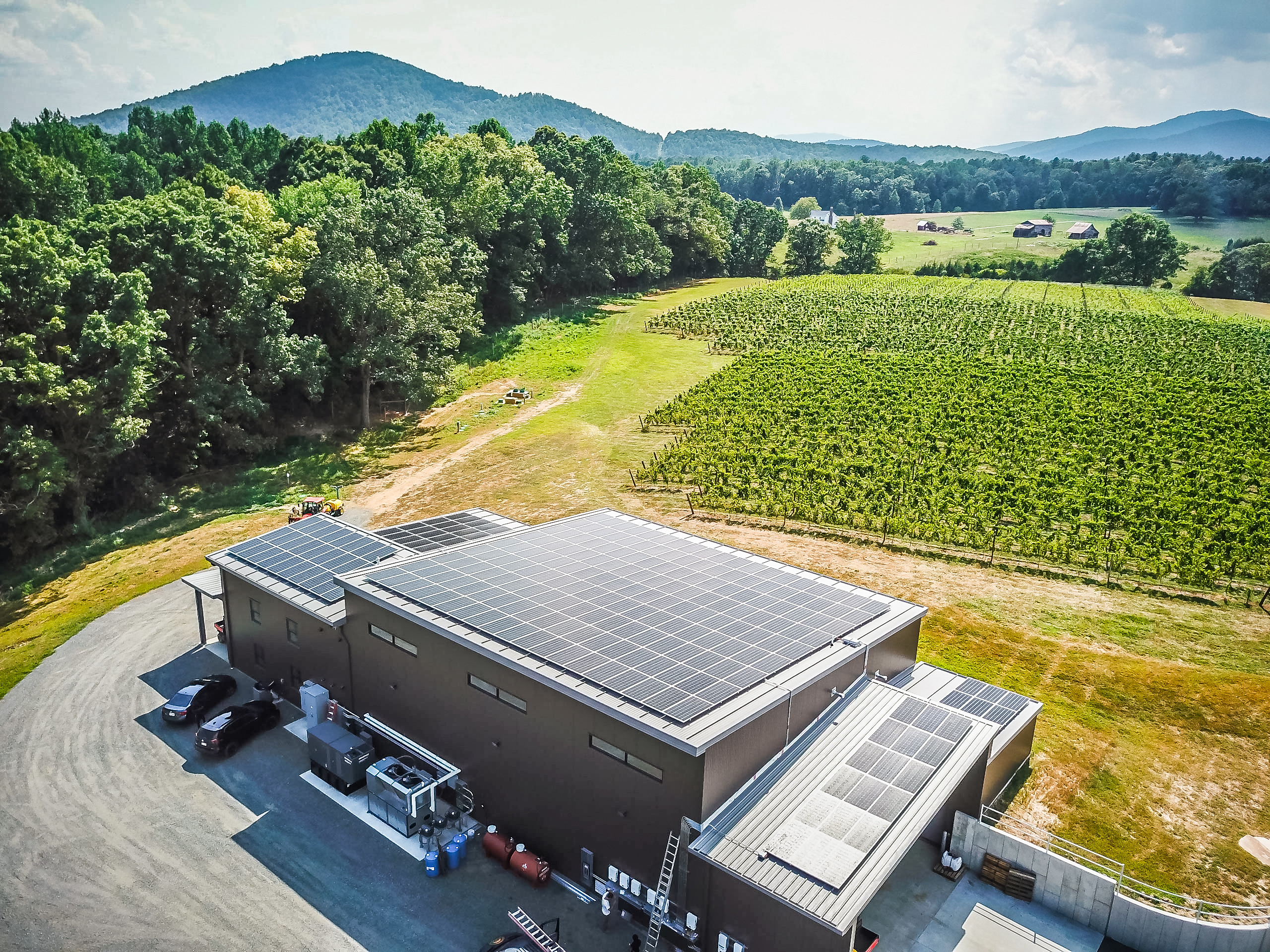
Rooftop Solar at Hark Vineyards in Earlysville, VA. Image credit: Sarah Stryker
Expanding our solar programs to include our schools, public facilities, and residential homes will create jobs, bolster energy efficiency, and decrease electricity costs. With the Inflation Reduction Act (IRA), there is no reason for Virginia to leave these federal funds on the table. Through these bills, low-to-moderate income Virginians will be able to greater participate in shared solar programs and offset all or a majority of the costs of a solar energy system.
Unfortunately, all of our supported solar bills were killed in the House by the end of session. We will continue to work with our Partners at the Sierra Club Virginia Chapter, SELC, and others to promote solar development in the Commonwealth in the years to come.
Read More on Clean, Efficient Energy

Clean Energy & Climate Recap: 2026 Bill Outcomes
Virginia Conservation Network advocated for 99 bills this General Assembly session that increase access to affordable, clean energy, support energy efficiency, regulate the data center industry's energy demand, and more.

Bill of the Day: Defending Attacks on Our Climate Laws
We’re defending attacks on the Virginia Clean Economy Act (VCEA), passed in 2020, that outlines a path for Virginia’s two largest electric utilities—Dominion Energy and Appalachian Power Company—to transition to 100% clean energy by 2045 and 2050, respectively.

Bill of the Day: Energy Efficiency & Affordability
VCN is supporting legislation to advance energy efficiency efforts that reduce energy costs and make energy more affordable.
Report: The Path to Affordable Power
Clean Virginia released a report providing an overview of key drivers of rising energy bills for Appalachian Power customers in Virginia and potential solutions.

Video: Energy Storage 101
Virginia Conservation Network hosted a webinar providing a foundational overview of what energy storage is, the range of technologies available, and how storage works alongside solar and wind to meet energy demand.

Video: Meeting Demand With Clean Energy
Virginia Conservation Network hosted a webinar exploring a recent modeling exercise on different possible projections in which clean energy reliably and affordably meets worst-case demand scenarios in the Commonwealth—without new fossil fuel infrastructure.

Video: Virginia’s Clean Energy Pillars – VCEA & RGGI
Virginia Conservation Network hosted a webinar diving into two key pillars of Virginia’s clean energy transition—the Virginia Clean Economy Act (VCEA) and the Regional Greenhouse Gas Initiative (RGGI).

Catch Up On Our Path to 100% Clean Energy Education Series
Virginia Conservation Network hosted an educational series tailored for decision-makers and advocates to learn about Virginia's transition to clean energy.
Report: Uncovering Energy Inequity in Albemarle County
Community Climate Collaborative released a report outlining programmatic, funding, and policy recommendations to reduce energy burden across Albemarle County.